We took over this Dutch car-rental operator’s Google Ads account with a cost-per-conversion sitting around €32 — well outside what the unit-economics could carry — and a conversion-volume line that was flat. The work was unglamorous: rebuild conversion tracking so we were measuring the right action, restructure campaigns around the rental-intent search terms that actually convert, then iterate weekly. Over two years the account compounded down to a blended €11.72 cost per conversion across 1,090 conversions on €12.8K of spend, with the trajectory ending at roughly a third of the inherited CPA.
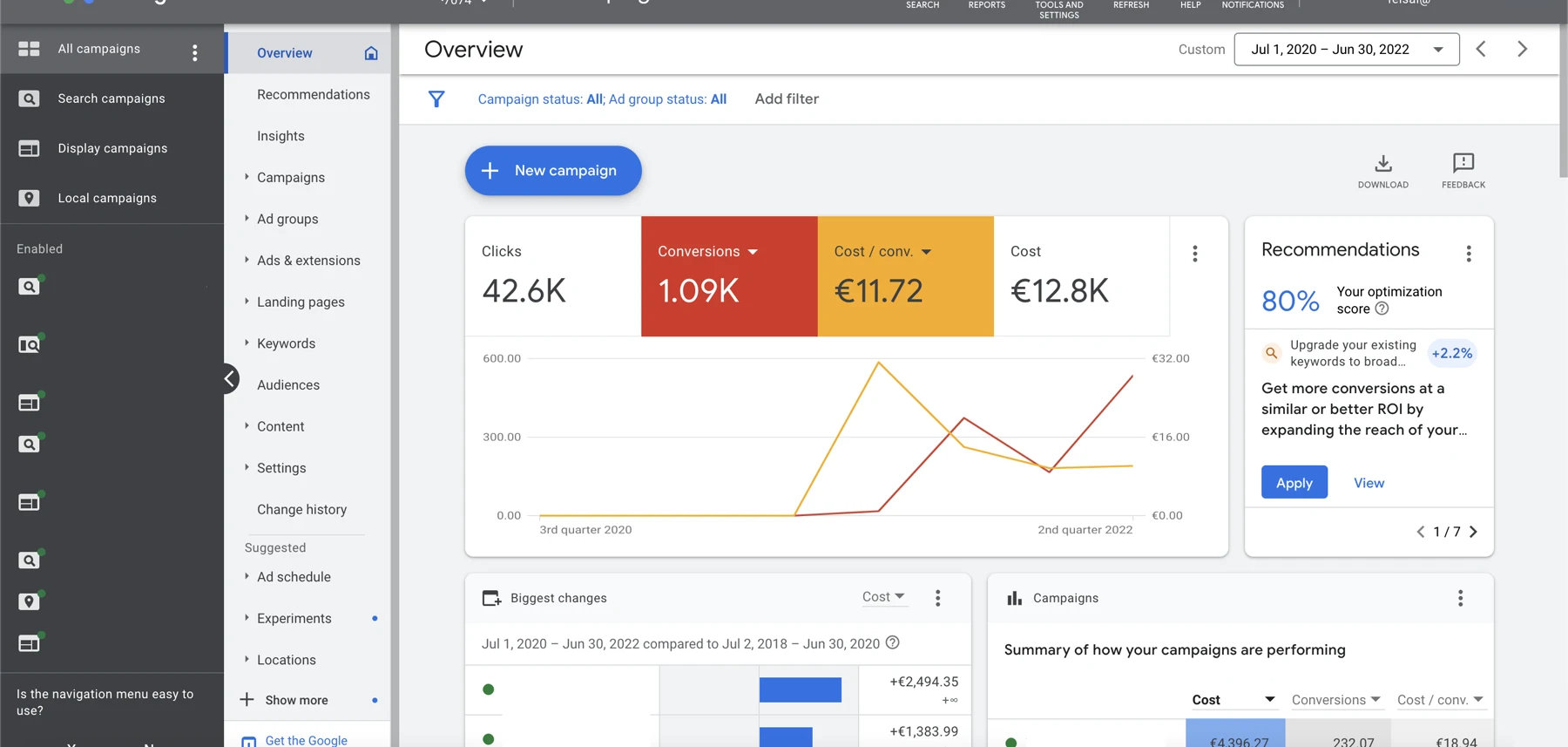
The chart shows the trajectory the diagnosis predicted: the red conversion-volume line stepping up across the 24-month window, the yellow cost-per-conv line trending down through 2021 into 2022 as the structural fixes compounded. The blended €11.72 is the average across the whole engagement — the end-state CPA sat lower than the inherited €32, in roughly the €10 range.
What we did: fix tracking, rebuild structure, hold the curve
You can’t optimise what the account isn’t measuring. At handover, conversion tracking was firing on actions that didn’t map cleanly to a rental booking — a mix of soft engagements and double-counted events that made the €32 CPA look like a real benchmark when it was actually a measurement artefact.
First job: rebuild the conversion setup so every recorded conversion represented an action the business actually cared about — booking-step completion, qualified phone calls, B2B quote requests for the fleet side.
A CPA built on the wrong conversion event isn't expensive or cheap. It's just wrong. The €32 figure became actionable only once the underlying event was something the operator would pay €32 to acquire.
The inherited account ran a single, mixed structure where short-term consumer rentals competed against longer B2B fleet enquiries inside the same campaigns. That collapsed two different bid curves and two different landing-page requirements into the same bidding signal. We split them: a B2C cluster on consumer-rental intent (short-term, weekend, holiday queries), a B2B cluster on fleet and business-rental queries, and a brand-defence campaign sized to its own auction insight rather than absorbed into the generic search budget.
Within each cluster we worked through the keyword set the way you’d expect — pruning the broad-match bleed, tightening match-types where commercial intent was clear, building negative-keyword discipline to stop the consumer cluster from picking up B2B-shaped queries that needed different ad copy and a different landing experience.
Separate the B2C and B2B intent paths, separate the auctions.
Once tracking and structure were stable, the work became maintenance: weekly auction-insight review, monthly impression-share and CPA tracking, seasonal reweighting around Dutch rental peaks (summer, school holidays, year-end business demand). Nothing dramatic.
The CPA line drifts down through 2021 because the structural changes compound — a B2C cluster that’s no longer subsidising B2B inefficiency starts winning the auctions it’s actually built for, and the conversion-volume line steps up alongside.
Two years of weekly adjustments compounding, not a one-month spike.
Was able to work with Feisal for several years in the automotive industry. The goal of our cooperation was to generate as much revenue as possible with online activities for customers in this branch. Feisal has a good outlook and pragmatic approach.
By the numbers
The blended figures across the engagement: 42.6K clicks, 1,090 conversions, €12.8K total spend, €11.72 average cost per conversion. The trajectory matters more than the blend: an inherited CPA around €32 dropped through 2021 and stabilised in the €10 range by 2022, while conversion volume stepped up on the same budget envelope.
The CPA trajectory, before and after. Inherited pre-engagement to stabilised end of engagement.
A €32 cost-per-lead doesn’t usually need a hero campaign. It usually needs the conversion event to mean what it says.
Boring, predictable, attributable. That’s what good PPC looks like.
Every engagement starts with a 30-minute audit — free, no slides, just a screen-share through your account.
Book the audit →