We took over the Dutch Google Ads account of a premium executive-education institute in January 2022 — sister-account to the German operation we’d just started restructuring. The diagnostic was the same: a campaign spending budget without a clear sense of what counted as a successful programme enquiry. Cost per enquiry was running around €40 and monthly volume was thin. By the end of June, the same budget envelope had produced 652 conversions at a blended cost of €11.44 — and the trajectory on the chart shows the cost-per-enquiry line exiting close to single-digit euros.
Industry: Executive education — premium B2B leadgen. Market: Netherlands. Period: Jan – Jun 2022 (6 months). Services: Google Ads · Conversion tracking · Campaign structure.
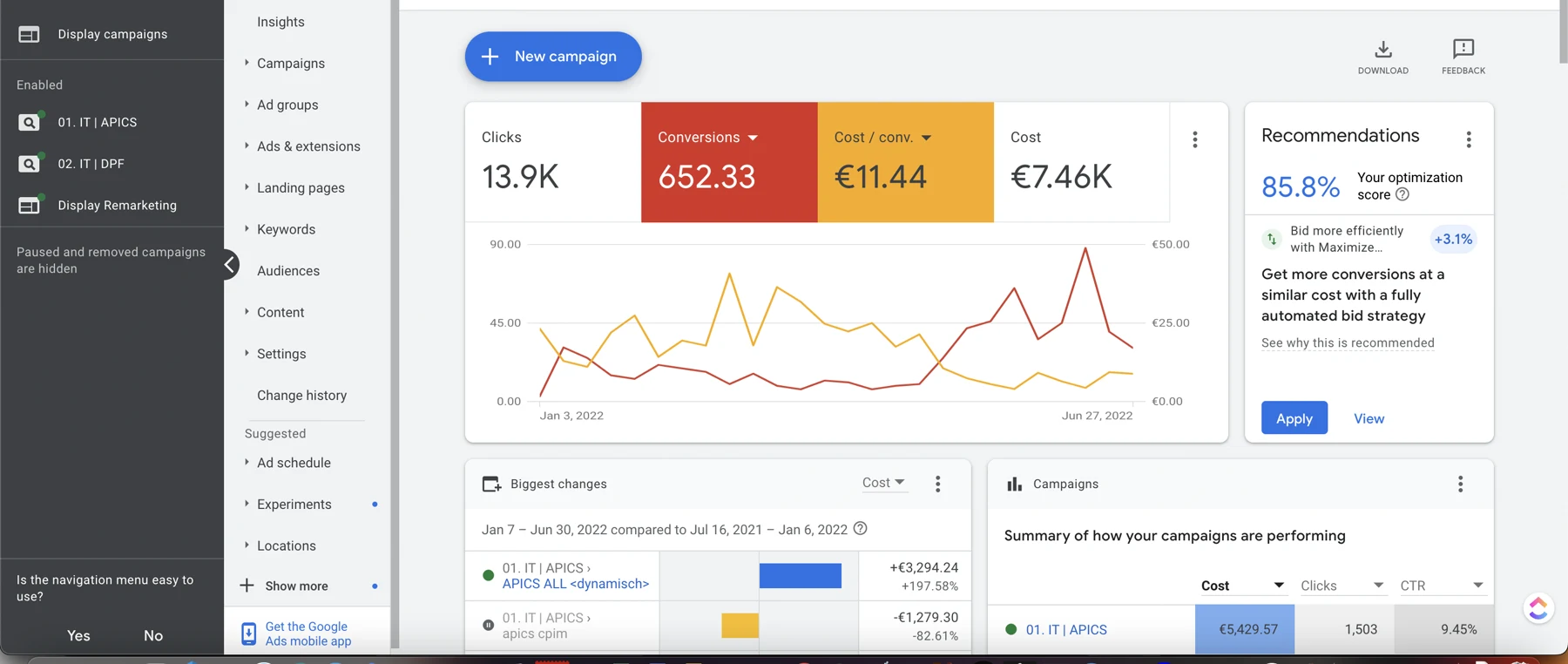
Two lines, one story: yellow conversion volume climbing through the period while red cost-per-enquiry steadily drops. The biggest single shift visible in the Biggest changes panel is a +€3,224 reallocation into the certification-cluster campaign that the rebuilt tracking finally proved was producing enquiries. That budget redirection is most of the six-month delta.
Three moves: define what counts, measure it honestly, redirect the spend
The Dutch sister-account showed the same diagnostic pattern as the German operation we were already rebuilding. Conversion tracking that wasn’t measuring what the admissions team actually needed it to measure. Form-submits for programme enquiries, brochure downloads, scheduled-call-back requests — all important to the admissions process, none of them firing cleanly into Google Ads as a single coherent conversion signal that bidding could optimise against.
Same brand, same software stack, same site-to-Ads handoff — and the same months of bid-noise underneath. Two markets, one fix.
We rebuilt the conversion-tracking layer from scratch. Programme-enquiry form submits, brochure-download events, scheduled-consultation requests — each one mapped to a specific Google Ads conversion action, with the irrelevant page-view and scroll-engagement noise stripped out of the import. The previous setup had been letting soft engagement events into the bidding signal, which diluted what the algorithm was working from.
Conversion-tracking discipline is unglamorous. It is also the single highest-impact intervention available on most accounts that have ever had a site redesign, a tag-manager handover, or a previous-agency departure in their history.
With tracking honest, the campaign structure followed. Search campaigns were broken into intent clusters by certification line — supply-chain certifications kept distinct from general management-training queries, with display remarketing reserved for warmed audiences only. Budget moved off the broad-match catch-alls that had been spending without converting and onto the keyword themes where actual programme enquiries were landing.
Visible in the Biggest changes panel of the screenshot: +€3,224 redirected into the certification-cluster campaign that the new tracking finally proved was producing enquiries. That single reallocation accounts for most of the six-month delta — not a budget increase, just a budget pointed at what now had a defensible signal under it.
Six months, 652 enquiries, €7,460 of spend, an account that knew what it was buying
The screenshot shows the blended numbers across the engagement: 13.9K clicks, 652 conversions, €7,460 of total spend, €11.44 cost per enquiry. The trajectory shows where the work went: a CPL line entering the period around €40 and exiting close to single-digit euros, while conversion volume climbed steadily after the tracking-and-structure rebuild landed.
Cost per enquiry, before and after.
Most accounts don’t need more budget. They need a tracking layer that earns the budget they already have.
Boring, predictable, attributable. That’s what good PPC looks like.
Every engagement starts with a 30-minute audit — free, no slides, just a screen-share through your account.
Book the audit →